Healthy Foundations First
Composite bonding works best when your teeth and gums are healthy. Preparing your mouth before treatment helps create cleaner margins, more accurate shapes and a more predictable result.
Professional Cleaning
We recommend professional cleaning before composite bonding to remove plaque, calculus and surface stains.
Ideally completed before your bonding appointment.Healthy Gums
Swollen or bleeding gums can affect moisture control, bonding accuracy and the appearance of the final gum margins.
Gum inflammation may need treatment first.Treat Dental Problems
Tooth decay, infection, broken fillings and active dental problems should be assessed and treated before composite is placed.
Cosmetic treatment should not cover active disease.Whitening Comes First
Composite cannot be lightened with whitening after placement. Complete whitening first when you would like a brighter final shade.
Your composite shade is matched after whitening.Why We Do Not Bond Over Inflamed Gums
Healthy gums provide a clean and stable margin around the teeth. Inflamed gums may bleed during treatment, making it harder to keep the area dry and shape the composite accurately.
Dr. Ming may recommend cleaning, gum treatment or a short healing period before composite bonding begins.
Preparation varies between patients. Some people only need routine cleaning, while others may require gum treatment or restorative care before composite bonding can safely proceed.
Cases Composite Can Improve
Composite bonding may be suitable when the teeth and gums are healthy and the desired changes can be achieved safely without creating excessive bulk or affecting the bite.
Small Gaps
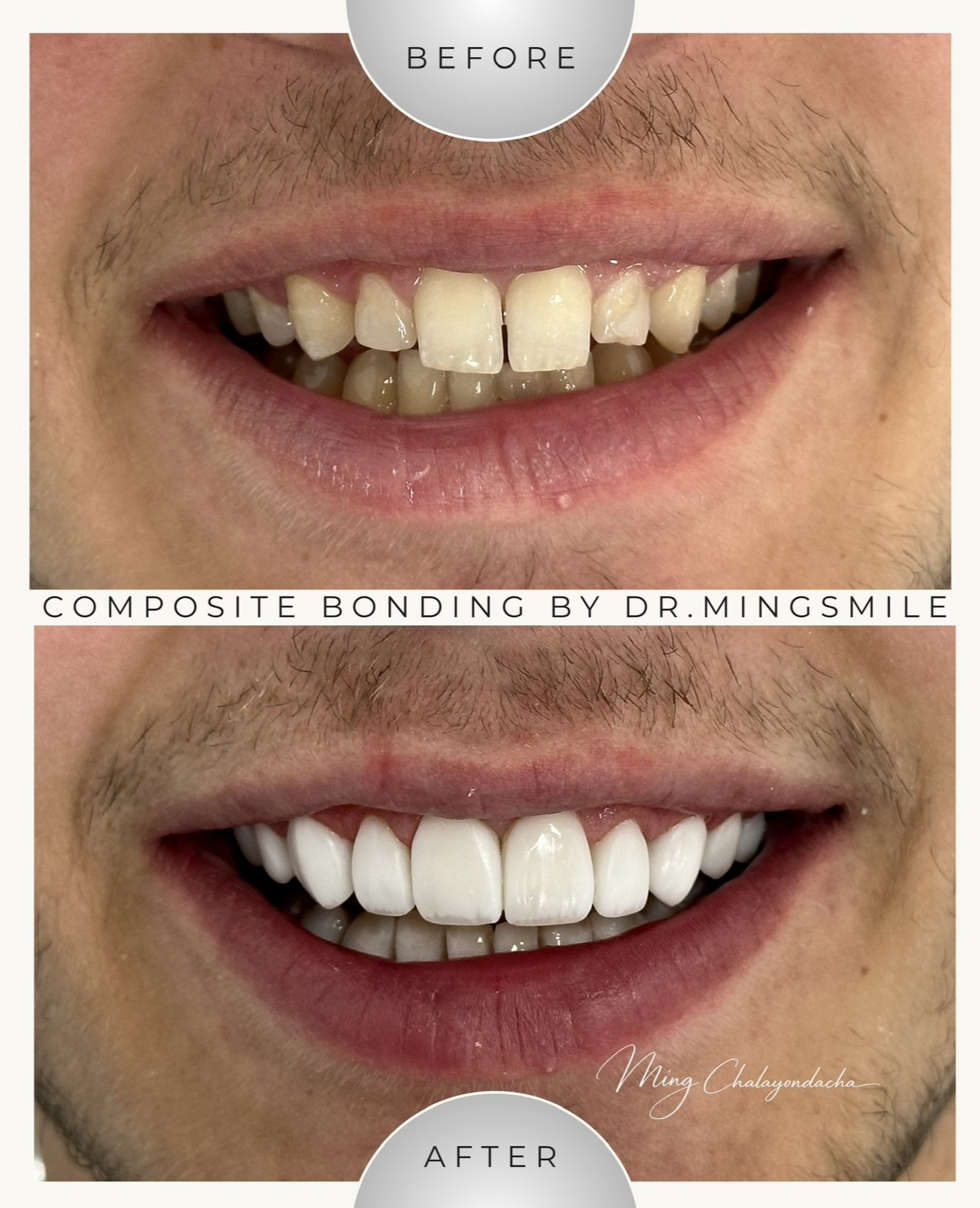
Composite can often close small spaces by carefully adding material to the sides of the teeth.
Chipped Edges
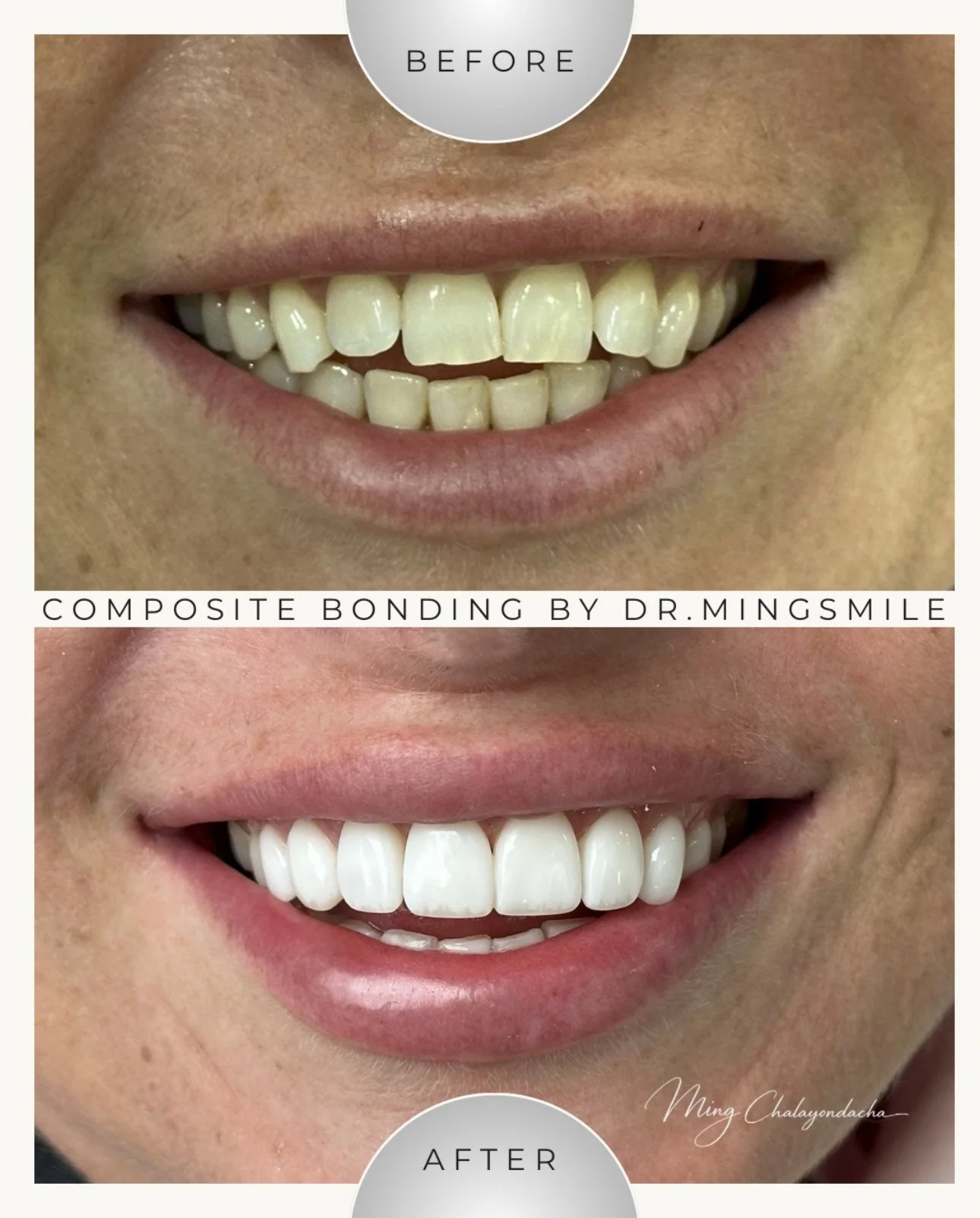
Selected chips and worn edges can be rebuilt to improve symmetry and create a smoother smile line.
Small Teeth
Composite can add width or length to naturally small, short or narrow teeth to improve their proportions.
Uneven Shapes
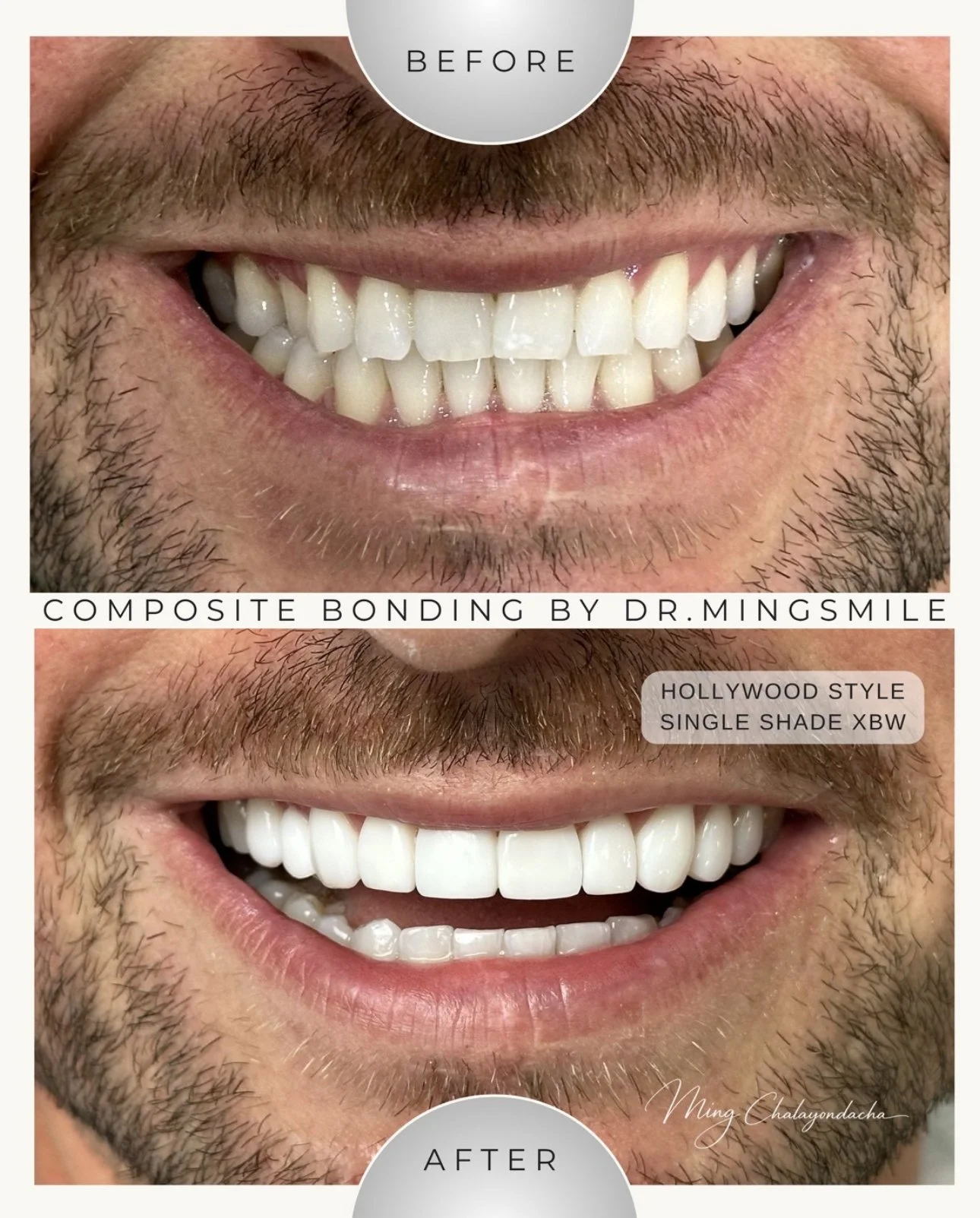
Mild differences in shape, length or line angles can often be balanced with hand-sculpted composite.
Selected Discolouration
Layered composite may help mask selected areas of discolouration, depending on the cause and severity.
Mild Smile Asymmetry
Composite can sometimes improve small differences between the front teeth and create a more harmonious appearance.
Final suitability depends on your tooth health, gum condition, bite and the amount of change required. Dr. Ming will assess whether composite can achieve a natural and predictable result.
Some Cases Need Another Treatment First
Composite bonding is not suitable for every smile. In some cases, treating the gums, bite, tooth position or underlying dental problem first can create a safer and more predictable result.
Active Gum Disease
Bleeding, swelling or unstable gum margins should be treated before cosmetic bonding.
Untreated Decay or Infection
Tooth decay, infection and dental pain must be assessed before composite is placed.
Severe Crowding
Heavily rotated or crowded teeth may need orthodontic treatment first to avoid bulky or unnatural shapes.
Major Bite Problems
An unstable bite, deep bite or edge-to-edge bite may place excessive pressure on the composite.
Severe Grinding
Heavy grinding increases the risk of wear and chipping, especially when a night guard is not worn.
Very Weak Teeth
Teeth with major structural loss, large restorations or severe erosion may need a stronger restorative option.
Dr. Ming May Recommend
Photos are helpful for an initial opinion, but the final decision also depends on your tooth health, gum condition and bite.
Shaving, Shade & Longevity
Every composite bonding case is personalised according to your natural teeth, smile goals and bite.
Do My Teeth Need to Be Shaved?
In many suitable cases, composite bonding requires little or no removal of healthy tooth structure. The material is added directly to the tooth and sculpted into shape.
Occasionally, a very small adjustment may be required to improve the shape, symmetry or bite. This will be discussed before treatment.
Can I Choose My Colour?
Yes. Your shade is selected with you before treatment. You may choose a natural colour that blends with the surrounding teeth or a brighter shade for a more noticeable transformation.
Composite cannot be whitened after placement, so whitening should be completed first when a lighter shade is desired.
Composite bonding commonly lasts for several years and may last longer with excellent care. There is no identical lifespan for every patient.
Your bite, grinding habits, diet and maintenance all influence how long the composite remains in good condition.
Protecting Your Composite Smile
Composite can remain beautiful for years, but it is not unbreakable. Good care, sensible habits and night-guard use help reduce wear, staining and chipping.
What Is a Night Guard?
A night guard is a custom-made appliance worn while sleeping. It helps reduce pressure from grinding and clenching and protects the composite from unnecessary force.
It is especially important for patients with tooth wear, a deep bite, jaw clenching or a history of grinding.
Composite Can Chip
Composite is durable but may chip through grinding, accidents or biting very hard objects.
- Wear your night guard
- Avoid biting ice, pens or fingernails
- Do not open packaging with your teeth
- Cut hard foods into smaller pieces
Composite Can Stain
Surface staining may develop over time depending on diet, smoking, oral hygiene and maintenance.
- Rinse after coffee, tea or coloured drinks
- Avoid smoking
- Attend regular cleaning appointments
- Arrange polishing when required
What If My Composite Chips?
1. Contact our team and send clear photographs.
2. Dr. Ming will review the area and advise you.
3. Minor repairs may sometimes be completed locally.
Standard or Protected
Without a Night Guard
A seven-day warranty applies when a night guard is not provided or recommended protection is declined.
With a Night Guard
A thirty-day warranty applies when the recommended night guard is provided and worn according to our instructions.
Warranty approval is subject to clinical assessment. It does not cover accidents, trauma, biting hard objects, untreated grinding, treatment performed elsewhere or failure to follow aftercare advice.
Which Brands Do We Use?
We use internationally recognised composite systems and may combine different materials to create strength, opacity, translucency and a polished enamel-like appearance.
Is Composite Bonding Right for You?
Send your smile photographs and concerns for an initial assessment with Dr. Ming.
Smile Gallery